
The Gardyn for Brown Thumbs
- James Arnold
- Dec 20, 2021
- 8 min read


Table of Contents -Is it Overwhelming? -Importance of pH
One of the biggest worries that I commonly see is “I been reading so much and it’s overwhelming, people adding things and everything else” Stop, because the Gardyn is exactly what is advertised. You read your manual, follow the instructions. You put your 6 gallons of water in, add your cubes and then wait. That’s it. You are feeling overwhelmed because many people who have Gardyn’s have a lot of experience with Hydroponics, AeroPonics and Gardening in general. Everyone has their own way’s and experience's that worked great for them, and they are sharing that experience with you to help you get into advanced stages of growing hydroponically. You don’t need all the bells and whistles; you need patience and just know a few rules about growing plants to be super successful. Plants and vegetables are like us humans, we are picky about what we eat, how hot or cold it is. We all have different needs as individuals. The same goes for plants. The Gardyn has researched all of this, and they built this system and came to a middle ground for the plants they provide, sure some plants might want more of one nutrient, and another might need less. So, with that being said, going by instruction of what Gardyn has sold with their unit, all your plants will be equal, as every plant is going to get the same thing rather, they like it or not. And doing so, your plants will produce and provide. Will they provide the biggest and best fruit? No, but they will provide just what you need. So, with all of that being said this is where the overwhelming reads comes about. All this information thrown out there are things people have found that worked great for them. Someone might suggest a nutrient fertilizer, because their Strawberries are HUGE, and pass that on as the best you can get, but another plant might not like it or plants they are growing are not plants you want to grow.
So, someone gets that fertilizer someone suggested when they are not growing strawberries and use it and realize some of their lettuce is droopy now, or the edges are burning, or their pepper plants are turning yellow.
That is because what worked for that person growing strawberries just won’t work for someone growing lettuce.
So, this is where I need to explain to you what your plants need.
1. Water
2. Oxygen
3. Humidity
4. Food
Water
Water has a substance scale called pH (Power of Hydrogen or Potential Hydrogen) it is used to measure if the water is acidic, or if it is alkaline based water.
A pH of 0 means the water is acidic, and 14 means the water is alkaline.
The right pH level is crucial because it affects nutrient availability for your growing plants. A pH level that is too high or alkaline can prevent nutrient uptake and lead to deficiencies. Iron deficiency causes pale or yellow leaves in young plants, while leaf cupping and tip burn are telltale signs of calcium deficiency. Calcium can also form salts that leave white deposits or scale on reservoir walls and equipment.
With some exceptions, the optimal pH range for hydroponically grown crops is generally between 5.5 and 6. Many fruits and vegetables, such as melons, apples, beans, squash, and tomatoes prefer that range. Blueberries, on the other hand, need a lower, more acidic pH between 4.0 and 5.0. It’s a good idea to use separate nutrient reservoirs for plants with similar pH ranges.
Some hydroponic crops have a wide optimal pH range. Pumpkin, for example, will thrive in a pH between 5.5 and 7.5. Crops that require alkaline conditions include kale, onions, and peas, which prefer pH levels between 6.0 and 7. Mint plants tip the scale at an optimal pH range of 7.0 to 8.0. Several factors can cause pH levels to change in hydroponic systems. When the amount of the nutrient solution drops below one gallon, the solution becomes more concentrated as plants absorb the nutrients. This results in widely fluctuating pH levels. It is, therefore, important to monitor nutrient solution levels, keep the reservoir full, and regularly test the pH in the reservoir. Both inorganic and organic matter can affect pH levels in hydroponics systems. For example, gravel and other inorganic growing media act as a buffer and cause pH levels to rise in media-based systems. In a natural environment, soil acts as a buffer in a similar way. To get an accurate pH reading in a media-based system, test the pH of the reservoir solution as well as the solution (leachate) that drains from the beds or bags that hold the plants. Algae and bacteria are the main types of organic matter that affect pH levels. If pH levels rise in the morning and drop later in the day, algae may be the culprit. As algae consume acidic carbon dioxide during the day, pH levels rise and then fall by evening. On the other hand, bacteria from root disease can cause a dramatic drop in pH levels. As diseased roots decompose, bacteria will release acids into the hydroponic solution. (Special Note) Take note that Rockwool has a natural high pH so algae growing on it’s surface is normal, there are many solutions throughout the Gardyn Facebook pages. Since it has a high pH and light it will grow while the rest of the system stays algae free as long as pH is maintained around 6.0.
The first step in maintaining the right pH levels is testing. A variety of testing supplies are available. Test strips and liquid test kits are the least expensive and are available at pool supply stores and garden centers. Commercially prepared “pH up” and “pH down” products are available to maintain the right pH levels. You can purchase these products in dry or liquid form and use them according to label instructions. Make sure you use products that are formulated for hydroponic systems. For small systems or short-term results, you can add weak acids such as vinegar or citric acid (Grape Seed Extract). A product that I use is here: https://amzn.to/3H2mH0a it comes with testing solution to test your pH levels.

Each plant needs certain growing conditions to thrive. It’s worth the time and effort to monitor and adjust pH levels in hydroponic systems. If you know the optimal pH ranges for your plants, you can take the necessary steps to keep your hydroponically grown plants healthy.
With a lot of testing, I have found a pH of 6.0 to be optimal in the Gardyn system.
Algae likes to start growing at a pH of 7.0, so keeping the pH where plants like it best will also prevent algae to grow. Algae hates an acidic environment, whereas our veggies love it.
I believe pH is the single most important thing in hydroponics, with the right pH everything should work like it is supposed to with minimal issues dealing with weak plants that cause bugs to start finding them because the plant had deficiencies. The deficiencies can most certainly be caused by the water, where it has entered a higher pH range choking the food supply off to the plants, and if the plant can't get food it starts to become deficient, and a deficient plant becomes sick, weakens thus providing bugs a place to feed.
Feeding
Right now, there are two different kinds of food people are using. Aerogarden liquid nutrient Veg-Bloom powdered nutrients You will read a lot of people saying Veg-Bloom caused plants to burn, or it leaves cement in the bottom of the jug, residue etc. But let me tell you the secret here, I will talk about TDS in a moment. Not everyone is going to want to do everything to make their water perfect, but if one wanted to, you could use distilled water, which will have 0 TDS and it will have 0 minerals in the water, when you add your preferred nutrients, that is all the distilled water will have in it, so you know exactly what you are getting with the food you use. Now, with tap water from the city, your water will have TDS in it, which is Total Dissolved Solids
Total Dissolved Solids can be anything from disinfectant by-products due to chlorine killing bacteria in the water from the city, rain runoff, manufacturing chemicals, pesticides, iron, magnesium, calcium. Anything that is a solid or chemical compound that is contained in the ground water. When using Tap, you do not know exactly what is in that water when you pour it into your Gardyn, it could have a high calcium ratio, or high iron, or high magnesium, and then when you add your nutrients, you are adding more of them minerals on top of the minerals in the tap water which will then cause leaf burn because of too many nutrients in the water now. So why does the Aerogarden food work so well? Because it is a little subtle in nutrient content. Do you think adding that will burn my plants if I add that to my tap water containing already some minerals? Nope, because Aerogarden is a little “Wimpy” on the nutrient side. 4-3-6 4% Nitrogen, 3% Phosphate and 6% Soluble Potash It’s got a %1 Calcium content and 0.5% Magnesium content (Common yellow leaves with dark veins, funky looking leaves that twist and curl and shrivel) All because Aerogarden food is lacking a bit in them minerals, and then people are forced in to buying other supplements because of what Aerogarden lacks. Veg-Bloom on the other hand has: 8% Nitrogen, 5% Phosphate and 13% Soluble Potash Veg bloom is also formulated to drop pH levels, so if you have high pH, this should bring it down a little if you do not monitor pH. Veg-Bloom has all needed nutrients including Macro and Micronutrients with silica added too. It is one of the best foods in the industry if you know how it works in the system, and that’s what I aim to teach so many people by understanding your water and pH. Veg-Bloom will work through your entire plant's life, and you don’t need to add “extras” to your water. If you maintain your pH to 6.0, you wouldn't even need to use peroxide to prevent algae. Sometimes, you can get a fluke in the system where you might have forgot to refresh or forgot to top water off when it went below 50% or you didn’t test pH and your pH got high and now you have algae, or some of your plants burned a little. But don’t worry! When you refresh your tank, and you get the algae out with peroxide, and you balance your pH to 6.0 and you get your food added back in, your burned plants will remain looking like they do, but new growth will soon happen, and everything will go back to normal. It is a practice to remove burned leaf's when this happens, you want to provide housekeeping and take out the trash, so your system and the plant does not put energy into trying to repair the burned-up leaves.
Suckers
This also goes for bug damage, remove damaged leaves, prune your suckers and pick off way to early flowers on tomato plants.


Suckers are always between a branch and main stem, always remove them. When you do this, you put more energy in your plant to grow bigger and to put energy to flowers and fruits. Deficiencies and what they look like
Magnesium Deficiency

Phosphorus Deficiency

Potassium Deficiencies
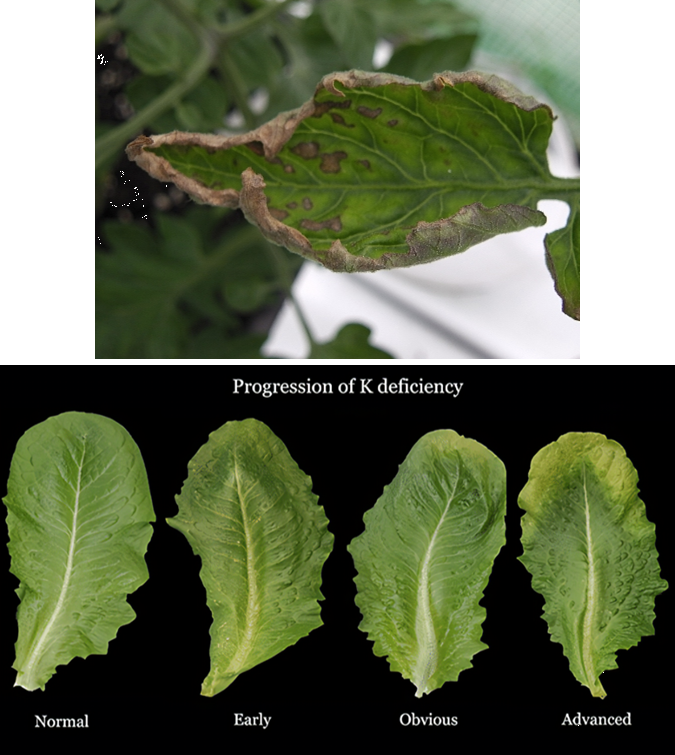
Iron Deficiencies

More Iron deficiencies.

BUGS
Thrips
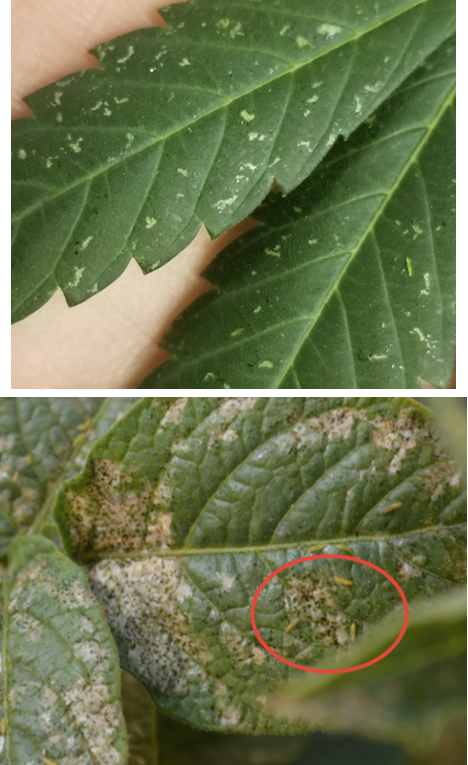
Aphids

Fungus Gnats

Mealybugs

Spider Mites

Bug Control
Spider Mites
1 Tbs Neem Oil
16oz Water
https://amzn.to/3FkJNOo
Aphids 1 qt water 3 tsp liquid Dish soap (African black soap is awesome)
https://amzn.to/33FPMzj Rinse plant after
Mealybugs 1 tsp Dr. Bronners Baby mild dish soap https://amzn.to/3EhodJ8 1 liter of water Bath plant in solution, then give a good rinse
Fungus Gnats
1 part Hydrogen peroxide 3%
3 parts water
Spray Bottle
Or Neem oil solution above
Thrips
See Aphids Method or Spider Mites solution
Other Gardyn Family Member Blogs:
https://nutritionofkaren.blogspot.com/
-James Arnold

Comments